
More than 6,500 participants from 55 countries and over 500 events, including plenary sessions, panel discussions and thematic meetings: these were the figures for the 35th Economic Forum in Karpacz. Held from 8 to 10 September 2026 under the theme “Architecture of a New Order – Stability in Times of Change”, the Forum brought representatives of institutions, business, academia and the cultural sector to the Polish town for three days of discussion on the changes reshaping political, economic and social dynamics in Europe and beyond.
The Forum’s international scope was reflected in the presence of more than 900 participants from outside Poland, including Nick Adams, Special Envoy of US President Donald Trump, and Guoxin Su, Chairman of CITIC Europe. The Regions Forum brought together more than 1,200 representatives of local authorities. Businesses also had a strong presence, with 170 corporate partners, 15% more than in 2024. More than 600 academics from 150 universities represented the research community. The programme also included reports and initiatives on infrastructure, security, health and regional development.
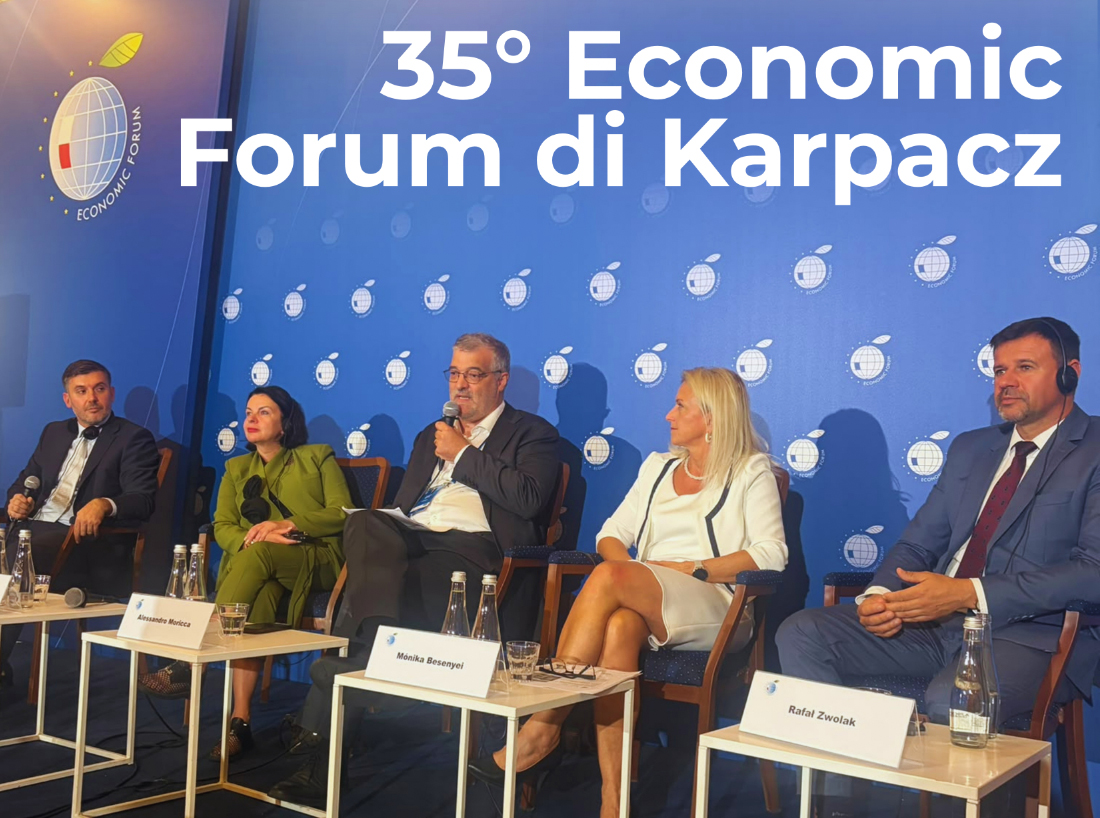
VSF took part in the Forum with its first panel in the official programme. “Between Two Pressures – Climate Risk and People Flows in Tourist Cities” explored two growing challenges for tourist cities: the effects of climate change and the concentration of visitors.
Although they arise from different causes, these pressures affect the same urban systems. Extreme weather and rising sea levels compound the demands that tourism places on mobility, public spaces, housing and employment, as well as on local communities. Addressing both challenges calls for governance that can track changing conditions, identify emerging problems and act before their effects become difficult to manage.
The panel was moderated by Damiano De Marchi, Project Manager for VSF’s Sustainable Tourism area. Speakers included Anna Pilarczyk, Mayor of Ogrodzieniec; Mónika Besenyei, Director of the Climate Policy Institute at Mathias Corvinus Collegium; Rafał Zwolak, Mayor of Zamość; and Alessandro Moricca, CEO of Consap. Together, they examined the links between visitor flows, climate policy, insurance risk and cooperation between the public and private sectors.
Venice provided a starting point for the discussion. The city faces two very different kinds of pressure: high tides and a substantial influx of visitors, estimated by VSF at 34.5 million a year. On one front, the MOSE system protects Venice and its lagoon from high-water events. On the other, analysis of the movements of residents, commuters and visitors helps measure how many people use the city, where and when they are concentrated, and what this means for the wider urban and metropolitan area. In both cases, measurement, monitoring and forecasting are essential to move beyond responding to problems as they arise and to plan effective action in advance.
The two mayors brought the discussion to cities where tourism growth offers opportunities but also requires careful management. Developing a destination’s appeal means finding ways to balance visitor demand, public services and residents’ daily lives. It also means involving local authorities, businesses and communities in shaping tourism that responds to social and environmental needs.
The discussion on climate policy highlighted the role of digital platforms and open public data in understanding environmental trends and tourism patterns. Data, however, must be matched by the necessary expertise, clear responsibilities and coordinated decisions. Training, simpler rules and incentives to support the transition are therefore all part of a strategy involving institutions, businesses and citizens.
The panel also considered the economic and insurance aspects of risk management. Prevention, adaptation and insurance coverage serve different but related purposes and require a balance between public and private responsibilities. Data can help assess exposure to risk, inform decisions and design measures to respond to crises and support recovery.
One conclusion emerged clearly: neither climate change nor tourism pressure can be addressed only when they become emergencies. Cities need resilient infrastructure, forecasting systems, shared knowledge and lasting cooperation between public and private organisations. Venice was presented as a useful case for discussion among places facing different conditions, rather than as a blueprint to be applied elsewhere. Solutions must be tailored to each city’s geography, economy and society, while pursuing a common goal: anticipating impacts, protecting places and preserving the quality of life of local communities.
